Wedding guest outfit ideas for men: What to wear for special occasions | H&M
What to wear to a wedding: The complete men's style guide
Wedding invitations have a way of turning even the most sartorial into question marks. What exactly is "smart casual"? Can you wear grey to a black-tie wedding? Is a suit always the answer? The short answer is: it depends, and this guide is here to break it all down. Whether you're heading to a relaxed outdoor ceremony, a formal evening reception or a vibrant cultural celebration — here's everything you need to know about dressing well as a male wedding guest — from decoding the dress code to getting every detail right.
The golden rule: when in doubt, dress up rather than down. A well-turned-out guest is always appreciated.
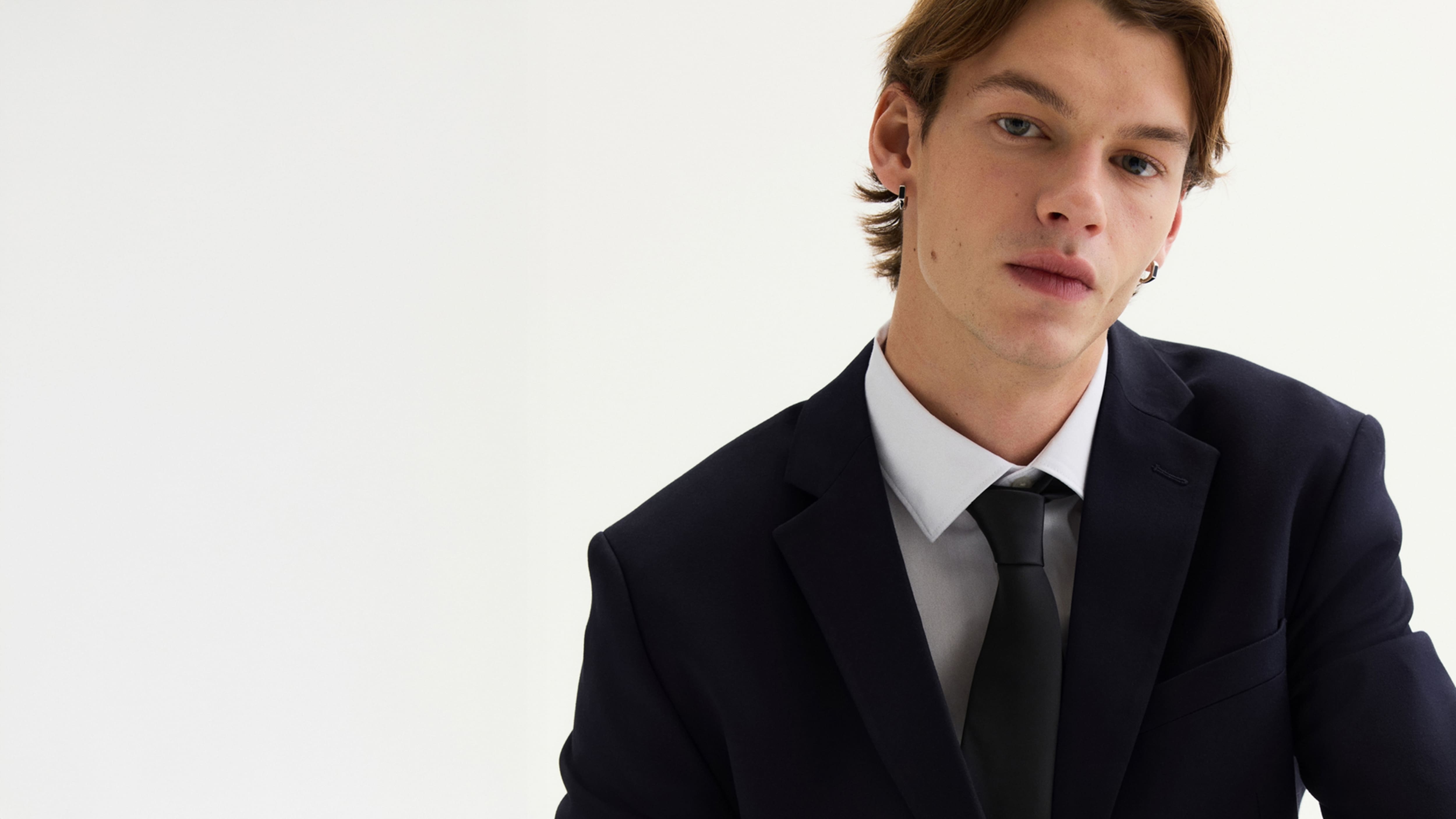
Men's wedding dress codes explained
The dress code on your invitation is the most important piece of styling information you'll get. Here's a clear breakdown of what each one means for men — and exactly what to wear.
White tie is the most formal dress code in existence and, while rarely requested at weddings, it does happen. The look is non-negotiable: a black tailcoat with matching trousers trimmed in silk braid, a white marcella dress shirt, white waistcoat and a white bow tie. Complete the outfit with patent leather Oxford shoes and follow the dress code precisely — there is no room for interpretation here.
Black tie signals formal evening elegance and is common at grand ballroom or estate weddings. The classic choice is a black tuxedo with matching trousers, a white dress shirt and a black silk bow tie, finished with black patent or highly polished leather Oxford shoes. For a stylish alternative, a velvet dinner jacket in navy or midnight blue works beautifully in place of standard black.
Black tie optional means a tuxedo is preferred, but a dark lounge suit is perfectly acceptable. Choose between a black tuxedo or a well-fitted dark suit in charcoal, navy or black. If you opt for a suit over a tuxedo, ensure it is impeccably fitted and paired with a crisp white shirt.
Cocktail or Formal is one of the most common wedding dress codes — smart, polished and elevated. A tailored suit in navy, charcoal or a subtle pattern works well, worn with a dress shirt with or without a tie. Finish with leather Oxford or Derby shoes, and consider adding a pocket square for extra polish.
Semi-formal or Lounge suit sits a notch below cocktail but still calls for a sharp, put-together appearance. A suit in navy, mid-grey or a classic check is the right starting point, worn with a shirt and tie or an open collar for a slightly more relaxed feel. Loafers and brogues work just as well here as classic Oxfords, and a blazer paired with tailored trousers is also appropriate.
Smart casual sits somewhere between jeans and a full suit — relaxed, but still polished. A blazer or sport coat worn with chinos or tailored trousers is the go-to combination, paired with an open-collar shirt or a fine-knit polo. Opt for loafers, brogues or clean leather sneakers. Avoid trainers or denim unless the invitation specifically says otherwise.
Garden party or Outdoor dress codes call for something relaxed, seasonal and practical. A linen or cotton suit in a lighter colour — beige, stone, sage green or pale blue — paired with a linen shirt strikes the right note. Choose loafers, brogues or clean leather shoes.
Beach or Destination weddings are sun-ready but still intentional. A lightweight linen suit or linen trousers with an open-collar shirt keeps things effortless, as do light-coloured chinos. Loafers or leather sandals are the footwear of choice. Leave the tie at the hotel, and feel free to carry a linen blazer or leave it off entirely.
Casual, while rare for weddings, still requires dressing with intention. Smart chinos or tailored trousers with a clean shirt or polo are the foundation, and a blazer instantly lifts the look. Ripped jeans, sports trainers and T-shirts are off the table — casual does not mean underdressed.
Black tie signals formal evening elegance and is common at grand ballroom or estate weddings. The classic choice is a black tuxedo with matching trousers, a white dress shirt and a black silk bow tie, finished with black patent or highly polished leather Oxford shoes. For a stylish alternative, a velvet dinner jacket in navy or midnight blue works beautifully in place of standard black.
Black tie optional means a tuxedo is preferred, but a dark lounge suit is perfectly acceptable. Choose between a black tuxedo or a well-fitted dark suit in charcoal, navy or black. If you opt for a suit over a tuxedo, ensure it is impeccably fitted and paired with a crisp white shirt.
Cocktail or Formal is one of the most common wedding dress codes — smart, polished and elevated. A tailored suit in navy, charcoal or a subtle pattern works well, worn with a dress shirt with or without a tie. Finish with leather Oxford or Derby shoes, and consider adding a pocket square for extra polish.
Semi-formal or Lounge suit sits a notch below cocktail but still calls for a sharp, put-together appearance. A suit in navy, mid-grey or a classic check is the right starting point, worn with a shirt and tie or an open collar for a slightly more relaxed feel. Loafers and brogues work just as well here as classic Oxfords, and a blazer paired with tailored trousers is also appropriate.
Smart casual sits somewhere between jeans and a full suit — relaxed, but still polished. A blazer or sport coat worn with chinos or tailored trousers is the go-to combination, paired with an open-collar shirt or a fine-knit polo. Opt for loafers, brogues or clean leather sneakers. Avoid trainers or denim unless the invitation specifically says otherwise.
Garden party or Outdoor dress codes call for something relaxed, seasonal and practical. A linen or cotton suit in a lighter colour — beige, stone, sage green or pale blue — paired with a linen shirt strikes the right note. Choose loafers, brogues or clean leather shoes.
Beach or Destination weddings are sun-ready but still intentional. A lightweight linen suit or linen trousers with an open-collar shirt keeps things effortless, as do light-coloured chinos. Loafers or leather sandals are the footwear of choice. Leave the tie at the hotel, and feel free to carry a linen blazer or leave it off entirely.
Casual, while rare for weddings, still requires dressing with intention. Smart chinos or tailored trousers with a clean shirt or polo are the foundation, and a blazer instantly lifts the look. Ripped jeans, sports trainers and T-shirts are off the table — casual does not mean underdressed.
No dress code on the invitation?
If the invitation doesn't specify a dress code, use the venue, time of day and formality of the event as your guide. A city hotel in the evening almost always means cocktail or semi-formal. A country house ceremony during the day suits smart casual to lounge suit. A beach or destination wedding leans towards relaxed but polished. An evening reception without a stated dress code is safest approached as cocktail attire.
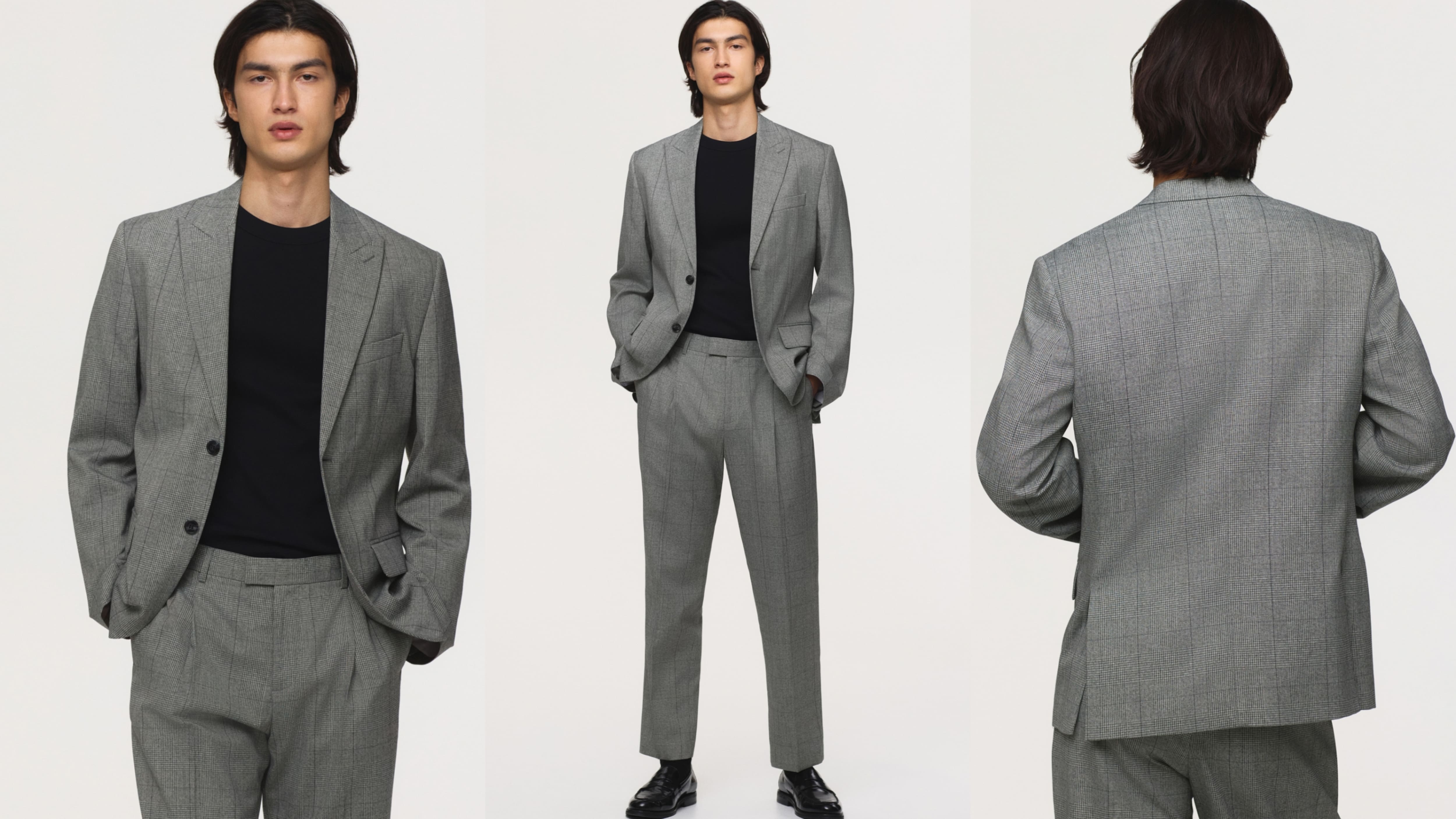
Choosing the right suit for a wedding
The suit is the foundation of most male wedding guest outfits. Getting the basics right — colour, fit and fabric — makes everything else easier.
Suit colour
Navy blue is the most universally flattering and appropriate suit colour for a wedding guest — it works across almost every dress code and season. Charcoal and mid-grey are equally safe and smart. For summer or garden weddings, lighter tones like stone, tan, pale blue and sage green are stylish options. Avoid wearing the same colour as the wedding party — if in doubt, ask.
• Navy blue — universally appropriate, works year-round
• Charcoal grey — formal, elegant, strong for evening events
• Mid-grey — versatile, pairs well with almost any shirt colour
• Stone / beige / sand — ideal for spring and summer outdoor weddings
• Tan / camel — smart and seasonal for warmer months
• Sage green / pale blue — a stylish, modern choice for garden and outdoor events
• Black — reserved for the most formal occasions; rarely needed for wedding guests
• Navy blue — universally appropriate, works year-round
• Charcoal grey — formal, elegant, strong for evening events
• Mid-grey — versatile, pairs well with almost any shirt colour
• Stone / beige / sand — ideal for spring and summer outdoor weddings
• Tan / camel — smart and seasonal for warmer months
• Sage green / pale blue — a stylish, modern choice for garden and outdoor events
• Black — reserved for the most formal occasions; rarely needed for wedding guests
Suit fit
Fit is everything. No matter the pricepoint, the suit will not look elevated if it doesn't fit correctly. The key checkpoints: shoulders should sit squarely at your shoulder bone, the jacket should button without pulling, trouser hems should sit cleanly at the top of your shoe, and shirt cuffs should show around 1–1.5 cm below the jacket sleeve.
If you're buying a new suit for a wedding, allow time for basic alterations — taking in the waist, shortening trousers and nipping in the jacket back makes a significant difference to how a suit looks.
If you're buying a new suit for a wedding, allow time for basic alterations — taking in the waist, shortening trousers and nipping in the jacket back makes a significant difference to how a suit looks.
Suit fabric
Season should guide your fabric choice. Wool is the most versatile year-round suit fabric — lightweight wool works in spring and summer, mid-weight in autumn, and heavier wool or flannel in winter. For warm-weather and destination weddings, linen and cotton are excellent choices for breathability. Avoid polyester blends if you want the suit to look and feel elevated.
Two-piece vs three-piece
A three-piece suit — jacket, trousers and waistcoat — adds a layer of formality and polish that's particularly suitable for formal and semi-formal wedding dress codes. It also gives you the flexibility to remove the jacket during the reception while still looking sharp. A two-piece suit is equally appropriate for most occasions and simpler to style.
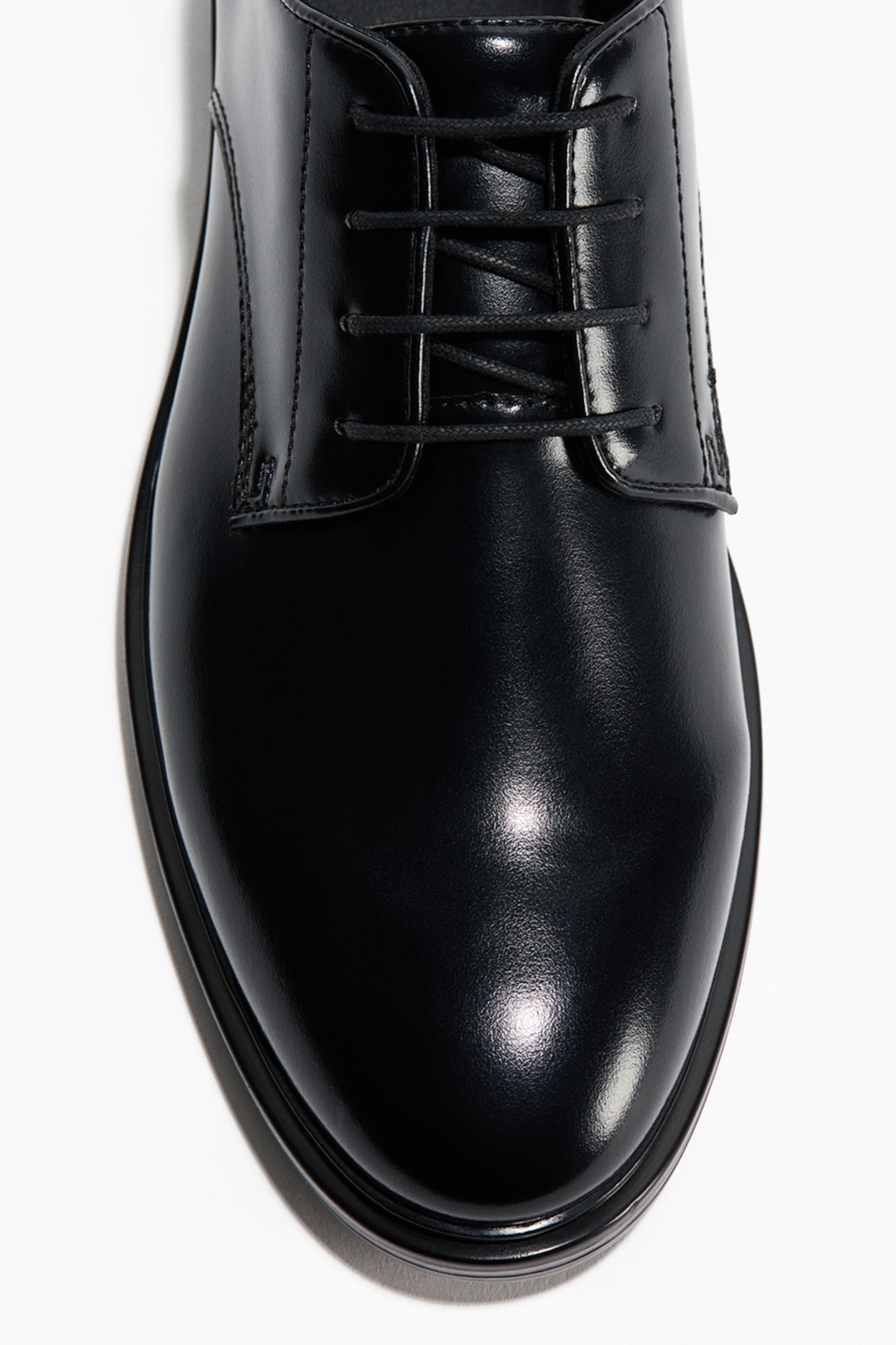
Getting the details right: Shirts, ties & shoes
Shirts
A white or pale blue dress shirt is the most reliable choice across all dress codes. For more casual or smart casual weddings, a fine-stripe, subtle check or Oxford weave shirt adds personality. Ensure the collar sits cleanly — a collar that gapes or pulls undermines an otherwise sharp look. For black tie, a white marcella (piqué) bib-front shirt is the standard.
• White dress shirt — the classic, works with everything
• Pale blue — softens the look, pairs particularly well with navy and grey suits
• Fine stripe or subtle check — adds personality for smart casual and semi-formal occasions
• Marcella/piqué front — required for black tie and white tie
• White dress shirt — the classic, works with everything
• Pale blue — softens the look, pairs particularly well with navy and grey suits
• Fine stripe or subtle check — adds personality for smart casual and semi-formal occasions
• Marcella/piqué front — required for black tie and white tie
Ties & bow ties
Whether to wear a tie depends entirely on the dress code. Black tie requires a bow tie (self-tie, not pre-tied — it's a small but noticeable difference). For cocktail and formal dress codes, a tie in silk, wool or a quality woven fabric is recommended. For smart casual, an open collar is perfectly appropriate. Pocket squares, worn in the breast pocket of your jacket, are an easy way to add colour and personality without wearing a tie.
• Black silk bow tie — essential for black tie; self-tie always preferred over pre-tied
• Silk or woven tie — appropriate for cocktail, formal and semi-formal codes
• Open collar — perfectly acceptable for smart casual and relaxed garden or beach weddings
• Pocket square — optional but a great way to add colour; fold simply rather than elaborately
• Black silk bow tie — essential for black tie; self-tie always preferred over pre-tied
• Silk or woven tie — appropriate for cocktail, formal and semi-formal codes
• Open collar — perfectly acceptable for smart casual and relaxed garden or beach weddings
• Pocket square — optional but a great way to add colour; fold simply rather than elaborately
Shoes
Shoes are one of the most noticed details of a men's outfit — and one of the easiest places to elevate or undermine an otherwise sharp look. As a rule: the more formal the dress code, the more polished and minimal the shoe.
• Oxford (cap-toe or plain) — the most formal men's shoe; required for black and white tie
• Derby shoe — slightly less formal than an Oxford; appropriate for cocktail and semi-formal
• Brogue — classic detailing; suits smart casual, semi-formal and country or garden weddings
• Loafer — relaxed and stylish; ideal for smart casual, summer and destination weddings
• Chelsea boot — a modern choice that works for smart casual to semi-formal dress codes
Always wear leather-soled shoes in a darker brown or black for formal occasions. Match your belt to your shoes. Ensure your shoes are clean and polished before the day.
• Oxford (cap-toe or plain) — the most formal men's shoe; required for black and white tie
• Derby shoe — slightly less formal than an Oxford; appropriate for cocktail and semi-formal
• Brogue — classic detailing; suits smart casual, semi-formal and country or garden weddings
• Loafer — relaxed and stylish; ideal for smart casual, summer and destination weddings
• Chelsea boot — a modern choice that works for smart casual to semi-formal dress codes
Always wear leather-soled shoes in a darker brown or black for formal occasions. Match your belt to your shoes. Ensure your shoes are clean and polished before the day.
Socks
Socks are a small detail that makes a big difference. For formal occasions, match your socks to your trousers — dark grey with charcoal, navy with navy. For smarter casual occasions, this is your chance to add a subtle hit of personality: a stripe, a subtle pattern or a contrasting colour can work well. Avoid sports or cotton ankle socks regardless of the formality level.
Accessories
Less is more. A quality watch, a simple pocket square, a tie bar (worn neatly between the third and fourth shirt buttons) and a leather belt are all that's needed. Avoid over-accessorising — multiple rings, chunky necklaces or novelty cufflinks detract from an otherwise polished look. Cufflinks are a great touch for French-cuff shirts at formal occasions.
Men's wedding guest outfits by season
Spring wedding guest outfits for men
Spring weddings call for lighter fabrics and a slightly fresher colour palette. A mid-weight wool or cotton suit in navy, mid-grey or a subtle check is ideal. As temperatures can still drop in the early months, layering is worth thinking about — a tailored overcoat or a fine-knit jumper beneath your jacket are practical options.
• Navy wool suit with a pale blue or white shirt
• Mid-grey suit with a subtle stripe tie and Oxford shoes
• Stone or camel suit with a white shirt and brown leather shoes
• A blazer with tailored chinos for smart casual spring weddings
Colour palette: navy, mid-grey, stone, camel, soft blue, muted green.
• Navy wool suit with a pale blue or white shirt
• Mid-grey suit with a subtle stripe tie and Oxford shoes
• Stone or camel suit with a white shirt and brown leather shoes
• A blazer with tailored chinos for smart casual spring weddings
Colour palette: navy, mid-grey, stone, camel, soft blue, muted green.
Summer wedding guest outfits for men
Summer weddings — particularly outdoor ones — require fabrics that breathe. Linen is the gold standard for warm-weather dressing: it's lightweight, looks relaxed and intentional, and improves in appearance as it softens through the day. A lightweight wool or cotton-linen blend suit is another strong option.
• Linen suit in stone, beige, pale blue or sage green
• Navy or grey cotton suit with a linen or open-collar shirt
• Light-coloured chinos, a linen shirt and a blazer for smart casual weddings
• A white or pale shirt is cooler and more practical than darker colours in the heat
Colour palette: stone, sand, pale blue, sage green, warm white, tan.
• Linen suit in stone, beige, pale blue or sage green
• Navy or grey cotton suit with a linen or open-collar shirt
• Light-coloured chinos, a linen shirt and a blazer for smart casual weddings
• A white or pale shirt is cooler and more practical than darker colours in the heat
Colour palette: stone, sand, pale blue, sage green, warm white, tan.
Autumn wedding guest outfits for men
Autumn is arguably the best season for menswear at weddings. The cooler temperatures allow for richer fabrics and deeper colours, and the season lends itself to textural dressing — tweed, flannel, heavier wool and layering all come into their own.
• Charcoal or navy flannel suit with a white shirt and silk tie
• Tweed or herringbone sport coat with tailored trousers and a turtleneck
• Mid-brown suit with a chocolate knit tie and tan brogues
• Three-piece suit in a rich tone for formal autumn weddings
Colour palette: charcoal, deep navy, forest green, burnt sienna, tan, chocolate brown.
• Charcoal or navy flannel suit with a white shirt and silk tie
• Tweed or herringbone sport coat with tailored trousers and a turtleneck
• Mid-brown suit with a chocolate knit tie and tan brogues
• Three-piece suit in a rich tone for formal autumn weddings
Colour palette: charcoal, deep navy, forest green, burnt sienna, tan, chocolate brown.
Winter wedding guest outfits for men
Winter weddings, especially evening ones, are an opportunity to embrace full elegance. Darker, richer tones work beautifully, and heavier fabrics — thick wool, velvet, flannel — feel seasonally appropriate. A three-piece suit in a dark tone provides warmth and formality. For black tie events, a midnight blue tuxedo or velvet dinner jacket is a considered alternative to standard black.
• Charcoal or black three-piece suit for formal winter weddings
• Midnight blue or velvet dinner jacket for black tie occasions
• Dark navy suit with a rich burgundy tie for semi-formal events
• Heavy wool suit in forest green or deep teal for a modern take
Colour palette: charcoal, midnight navy, black, deep burgundy, forest green, rich brown.
• Charcoal or black three-piece suit for formal winter weddings
• Midnight blue or velvet dinner jacket for black tie occasions
• Dark navy suit with a rich burgundy tie for semi-formal events
• Heavy wool suit in forest green or deep teal for a modern take
Colour palette: charcoal, midnight navy, black, deep burgundy, forest green, rich brown.
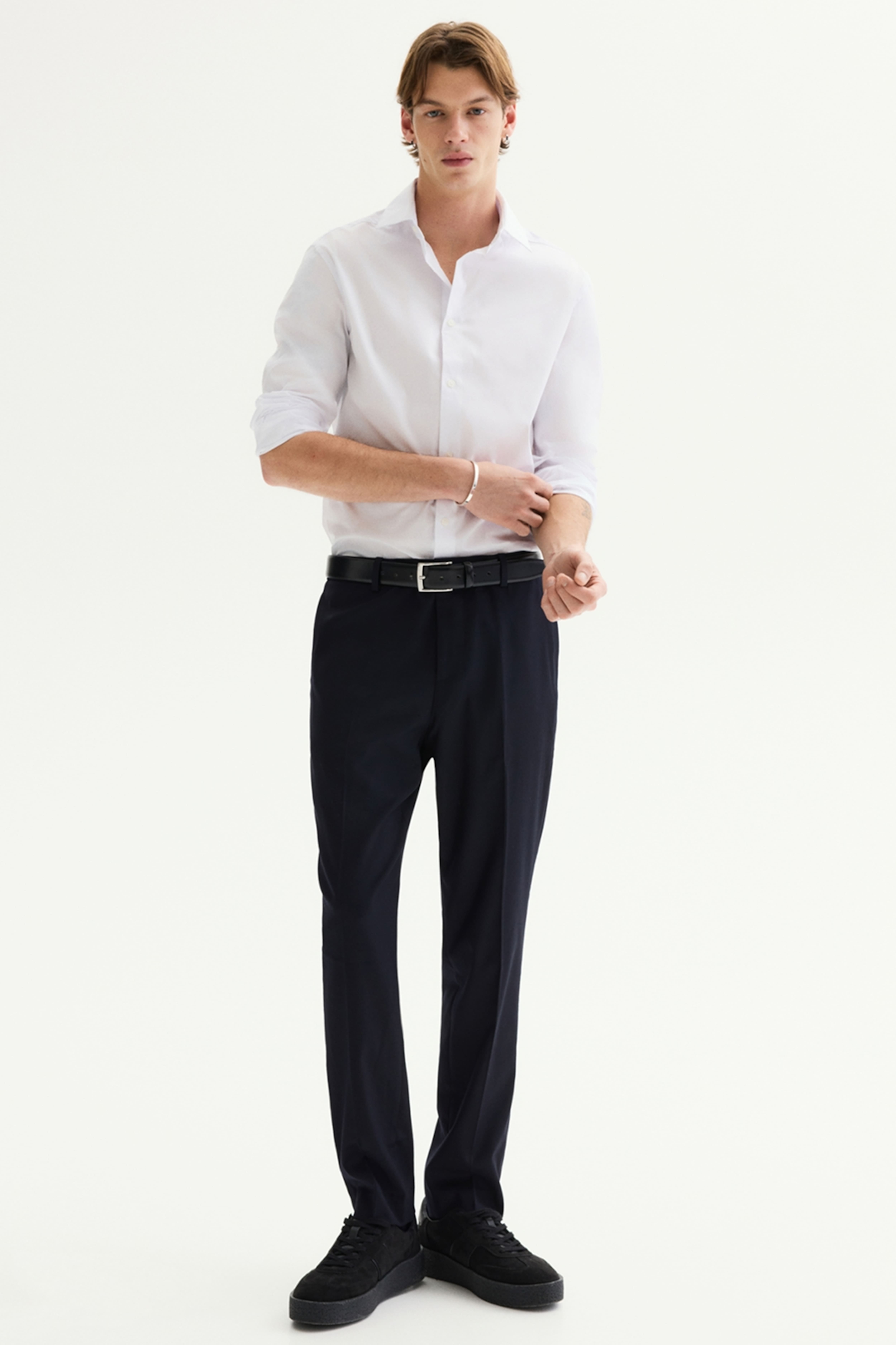
Dressing for different types of weddings
Country house or estate wedding
Country house weddings lend themselves to classic British tailoring with a relaxed edge. Think well-fitted suits in heritage patterns — tweed, check, Prince of Wales — worn with brogues and a pocket square. Smart casual to lounge suit is the typical dress code, with a slight leaning towards the traditional.
Style notes: a tweed or herringbone sport coat with tailored trousers and Chelsea boots is a strong country house look. A three-piece suit in a muted check or subtle tartan works for more formal occasions.
Style notes: a tweed or herringbone sport coat with tailored trousers and Chelsea boots is a strong country house look. A three-piece suit in a muted check or subtle tartan works for more formal occasions.
City or hotel wedding
Urban weddings tend to be smarter and more directional in their dress expectations. Cocktail to semi-formal is the norm. A sharp, well-fitted suit in navy or charcoal with a clean dress shirt is always right. This is a setting where a bolder tie, an interesting pocket square or a more directional shoe can add personality without feeling out of place.
Style notes: a slim-fit navy suit, white shirt, burgundy tie and black Oxfords is a foolproof city wedding look. If you're fashion-forward, a double-breasted suit is a strong choice.
Style notes: a slim-fit navy suit, white shirt, burgundy tie and black Oxfords is a foolproof city wedding look. If you're fashion-forward, a double-breasted suit is a strong choice.
Garden or outdoor wedding
Outdoor weddings require a little practical thinking alongside the style choices. Consider the ground — thin-soled or stiletto-heeled shoes are impractical on grass. Lighter fabrics that breathe are important in warmer months. And always have a layer — a blazer or lightweight coat — to hand for cooler moments or evening temperature drops.
Style notes: avoid overly formal footwear on grass. Brogues and loafers are the most practical outdoor wedding shoe. A lighter suit in a seasonal tone looks more appropriate than a dark city suit at a relaxed outdoor event.
Style notes: avoid overly formal footwear on grass. Brogues and loafers are the most practical outdoor wedding shoe. A lighter suit in a seasonal tone looks more appropriate than a dark city suit at a relaxed outdoor event.
Beach or destination wedding
Destination weddings, particularly in hot climates, call for a complete rethink of the standard suit. Linen is your best friend — lightweight, breathable and effortlessly relaxed. Drop the tie, wear an open collar, and choose footwear that works on different terrain. Resist the urge to dress as if you're at a pool party — the occasion still deserves intention and polish.
Style notes: a linen suit in stone or white, an open-collar shirt and tan leather loafers is a near-perfect destination wedding look. Roll or leave the jacket for warmer parts of the day.
Style notes: a linen suit in stone or white, an open-collar shirt and tan leather loafers is a near-perfect destination wedding look. Roll or leave the jacket for warmer parts of the day.
Evening reception only
Attending the evening reception but not the ceremony? Cocktail to semi-formal is the right level of dress. This is a more forgiving context — you can lean into darker tones, bolder accessories or a more directional suit silhouette without worrying about ceremony formality.
Intimate or registry office wedding
Smaller, quieter weddings call for a considered but understated approach. A well-fitted suit in a classic tone, a clean shirt and smart shoes is the right call. The focus here is on looking polished and intentional rather than making a bold statement.
Civil ceremonies
Civil ceremonies follow the dress code set by the couple — which can range from cocktail formal to smart casual. They tend to be more relaxed in expectation than religious ceremonies, but the same principle applies: dress intentionally and respect the occasion.
Common men's wedding guest style mistakes to avoid
• Wearing a poorly fitted suit — fit matters more than price or brand
• Wearing unpolished or scuffed shoes — always clean and polish before the day
• Forgetting to iron your shirt — a creased shirt undermines an entire outfit
• Wearing sports socks with a suit — always wear dress socks that match your trousers
• Overdoing the accessories — a watch, a pocket square and perhaps cufflinks is enough
• Wearing a pre-tied bow tie to a black tie event — always self-tie
• Choosing a suit that's too casual or too formal for the dress code
• Turning up in black jeans and a blazer to anything more than a casual wedding
• Leaving the tie at home when the dress code calls for one
• Not checking whether the venue or ceremony has specific requirements (e.g. removing shoes)
• Wearing unpolished or scuffed shoes — always clean and polish before the day
• Forgetting to iron your shirt — a creased shirt undermines an entire outfit
• Wearing sports socks with a suit — always wear dress socks that match your trousers
• Overdoing the accessories — a watch, a pocket square and perhaps cufflinks is enough
• Wearing a pre-tied bow tie to a black tie event — always self-tie
• Choosing a suit that's too casual or too formal for the dress code
• Turning up in black jeans and a blazer to anything more than a casual wedding
• Leaving the tie at home when the dress code calls for one
• Not checking whether the venue or ceremony has specific requirements (e.g. removing shoes)
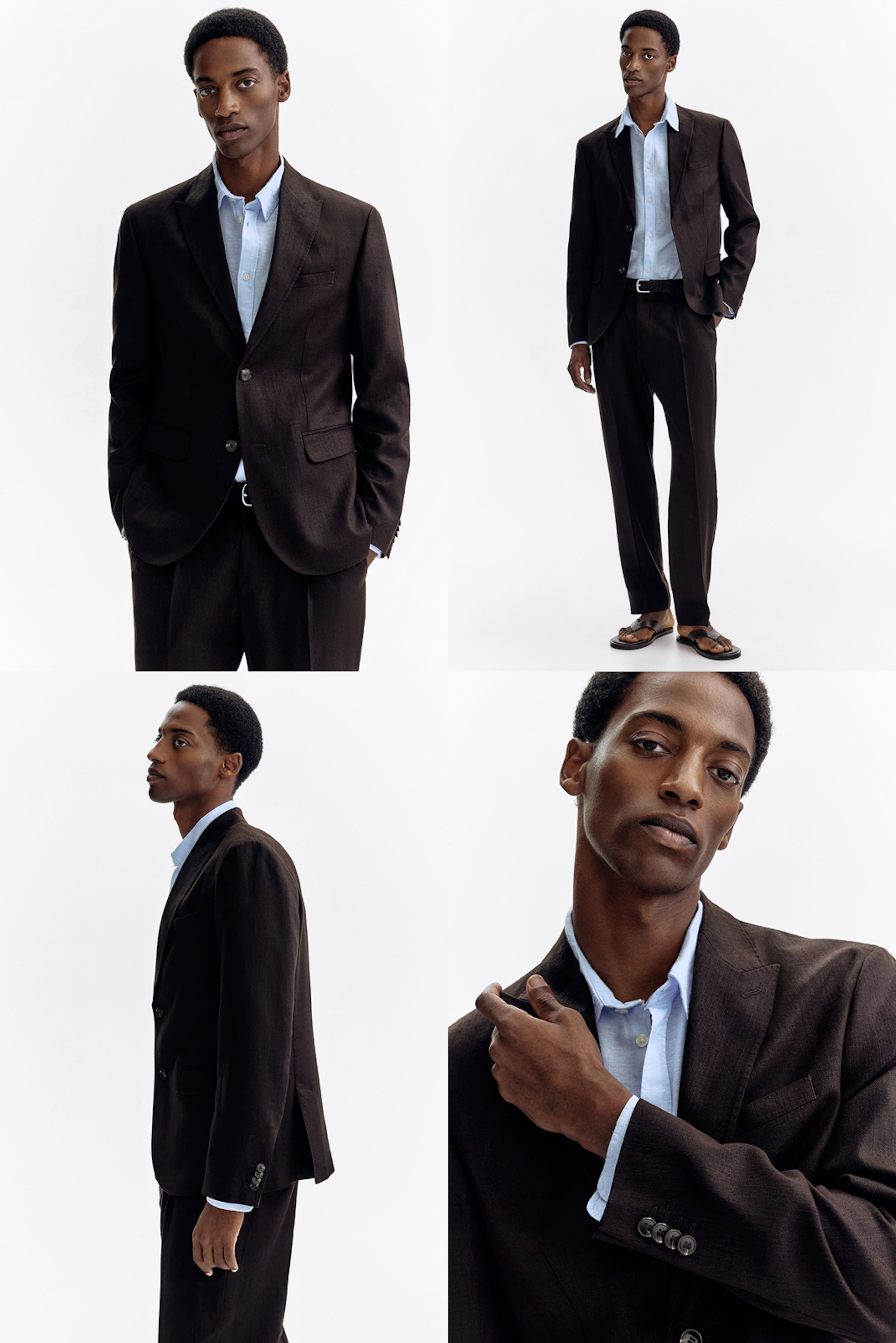
Shop men's wedding guest outfits at H&M
At H&M, you'll find everything you need to dress sharply as a wedding guest — from tailored suits and suit separates to dress shirts, ties, pocket squares and occasion-ready shoes. Whether you're building a look from scratch or updating an existing suit with new accessories, our menswear edit covers every dress code and every season.
• Suits and suit jackets: slim-fit, regular and relaxed silhouettes in wool-blend, linen and cotton
• Suit trousers and chinos: tailored fits in a range of seasonal tones
• Dress shirts: white, pale blue, subtle stripe and formal marcella options
• Ties and bow ties: silk and woven options for every formality level
• Pocket squares: a simple and affordable way to elevate any suit
• Formal shoes and loafers: Oxfords, Derbies, brogues and loafers across multiple colourways
Tip: Our suit separates allow you to mix jacket and trouser sizes for a better fit — ideal if you're between standard suit sizes.
• Suits and suit jackets: slim-fit, regular and relaxed silhouettes in wool-blend, linen and cotton
• Suit trousers and chinos: tailored fits in a range of seasonal tones
• Dress shirts: white, pale blue, subtle stripe and formal marcella options
• Ties and bow ties: silk and woven options for every formality level
• Pocket squares: a simple and affordable way to elevate any suit
• Formal shoes and loafers: Oxfords, Derbies, brogues and loafers across multiple colourways
Tip: Our suit separates allow you to mix jacket and trouser sizes for a better fit — ideal if you're between standard suit sizes.
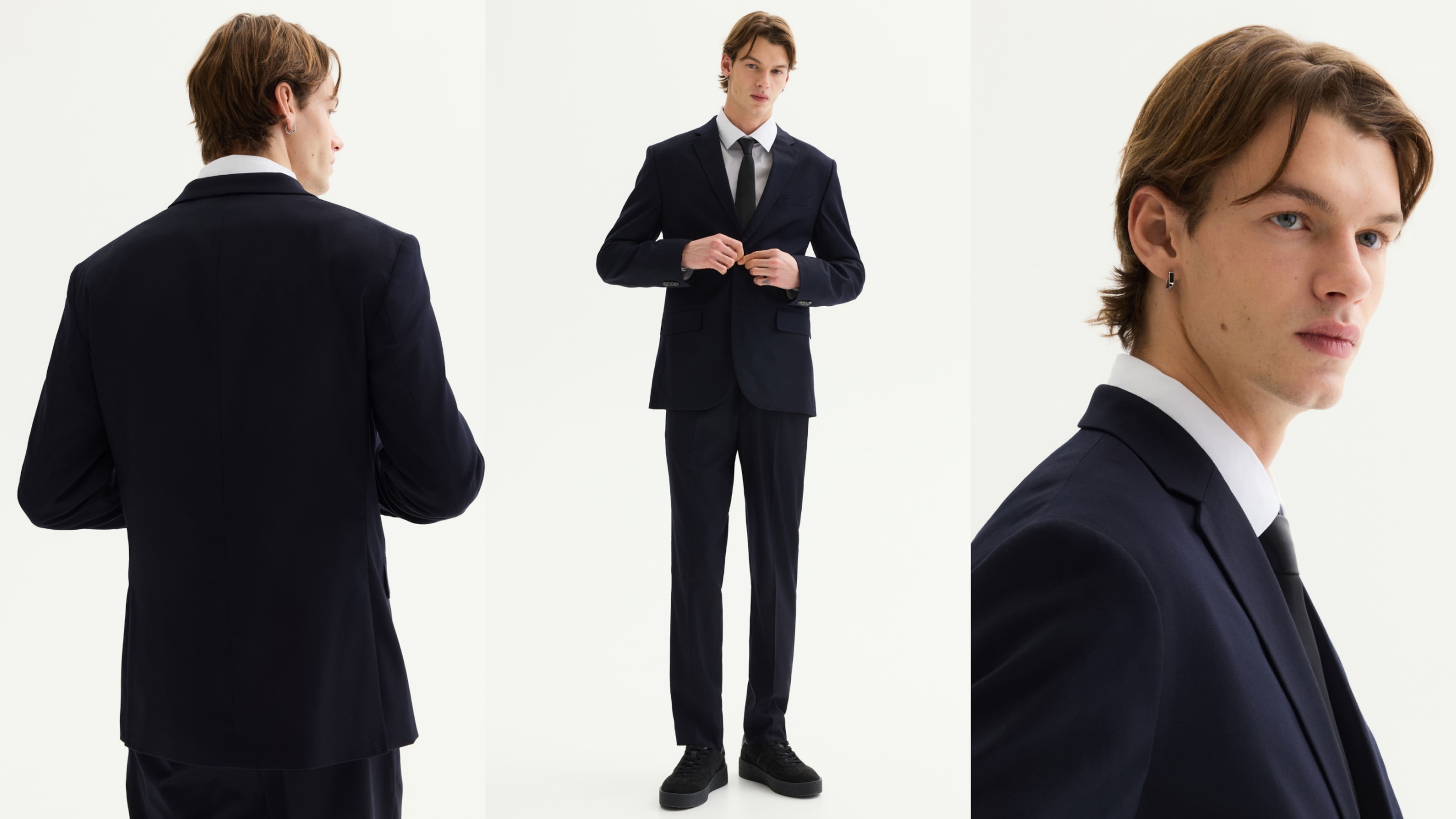
Frequently asked questions
What should a man wear to a wedding with no dress code?
When there's no dress code, opt for smart — a tailored suit in navy or charcoal with a dress shirt and leather shoes is almost always appropriate. Use the venue and time of day as your guide: an evening city venue calls for a sharper look than a daytime countryside celebration. If still unsure, ask the couple or check with another guest who might know.
Can men wear grey suits to a wedding?
Yes — grey is one of the most versatile and appropriate suit colours for a male wedding guest. Mid-grey is a classic, universally suitable choice that works across dress codes and seasons. Charcoal is a stronger, more formal option suited to evening and cocktail dress codes. Light grey works well at daytime and outdoor events. A grey suit paired with a white shirt and a tie in a complementary tone — burgundy, navy or soft pink — is a fail-safe combination.
Is it okay for men to wear a navy suit to a wedding?
Absolutely — navy is arguably the best suit colour for a male wedding guest. It's universally flattering, appropriate across almost every dress code, and works year-round. A navy suit pairs easily with white or pale blue shirts, and it's versatile enough to wear for everything from a smart casual afternoon celebration to a formal evening reception. If in doubt, navy is almost always the right call.
Do men have to wear a tie to a wedding?
It depends on the dress code. Black tie requires a bow tie. Cocktail and formal dress codes generally call for a tie. For semi-formal and lounge suit dress codes, a tie is recommended but an open collar can work if styled carefully. Smart casual and outdoor/destination weddings are the most flexible — an open collar with a well-fitted suit or smart separates is perfectly appropriate. If the invitation doesn't specify, err on the side of wearing a tie for anything more formal than a garden party.
Can men wear linen suits to a wedding?
Yes — and for summer and destination weddings, a linen suit is often the ideal choice. Linen is lightweight, breathable and has an effortlessly relaxed elegance that suits warm-weather occasions particularly well. Stone, beige, pale blue and white are the strongest colour choices for a linen suit. It's less appropriate for formal evening weddings or black tie events, where a heavier, more structured fabric is expected.
What colour suit should I wear to a summer wedding?
For summer weddings, lighter colours and weights work best. A navy, stone or pale blue suit in a linen or lightweight wool fabric is ideal. Earthy and natural tones — tan, sand, beige and sage — are modern and seasonally appropriate. Save darker tones like charcoal and black for evening events or more formal celebrations. If the wedding is outdoors, consider the venue backdrop when choosing your colour — a navy suit at a garden wedding is a stronger choice than a dark charcoal.
Can men wear black to a wedding?
Yes — a black suit is acceptable at formal and black-tie weddings, where it reads as elegant and intentional. For more casual or daytime weddings, black can feel overly sombre. A dark navy or charcoal suit tends to be a more versatile and flattering alternative for most occasions. If the dress code is black tie, a classic black tuxedo is entirely appropriate.
What shoes should men wear to a wedding?
The shoe should match the formality of the dress code. For black and white tie, a black cap-toe Oxford or patent leather shoe is required. For cocktail and formal dress codes, a plain or cap-toe Oxford in black or dark brown is the strongest choice. For semi-formal and smart casual occasions, Derbies, brogues and loafers are all appropriate. For outdoor or garden weddings, brogues or loafers are more practical than thin-soled Oxfords. Always ensure shoes are clean and polished before the day.
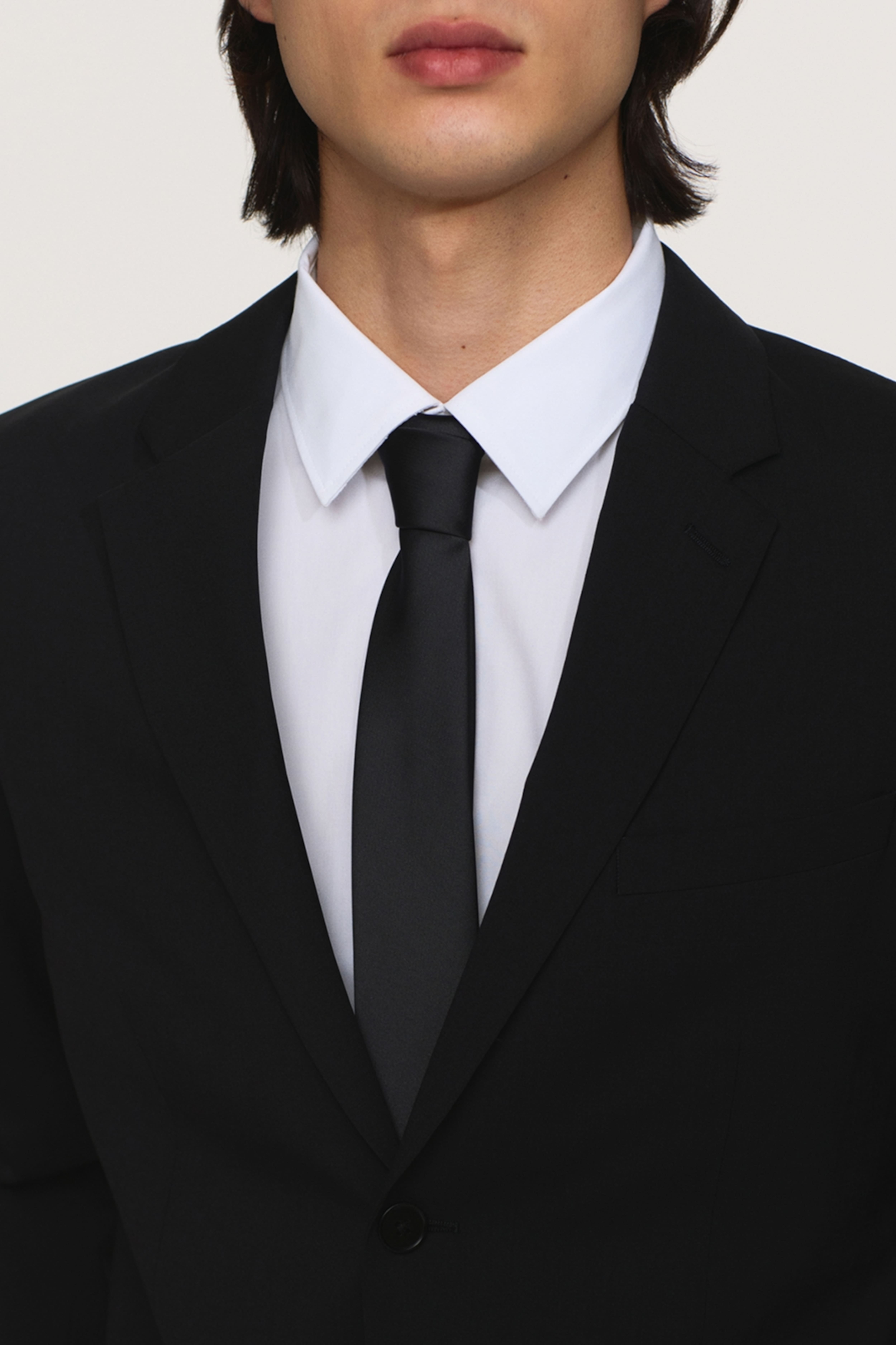
What should men wear to a black tie wedding?
For a black tie wedding, the standard look is a black tuxedo jacket with matching trousers (usually with a silk braid stripe on the leg), a white marcella dress shirt with a pleated or plain front, a self-tie black silk bow tie, a plain white pocket square, a black cummerbund or a waistcoat, and black patent or highly polished Oxford shoes. A midnight blue tuxedo is a widely accepted modern alternative to standard black, and a velvet dinner jacket in navy or burgundy is a stylish choice for those who want to stand out while remaining within the dress code.
Can men wear a suit without a jacket to a wedding?
For smart casual and outdoor or destination weddings, wearing suit trousers with a well-fitted shirt, open collar and loafers — without a jacket — can work. However, for any cocktail, formal or semi-formal dress code, keeping the jacket on for the ceremony is expected. You can always remove it during the reception as the evening relaxes. Removing the tie before the jacket is a good rule of thumb.
What should men wear to a garden or outdoor wedding?
For outdoor weddings, the key considerations are fabric and footwear. Choose a suit in a lighter fabric — linen, cotton or lightweight wool — and avoid stiletto-thin soles on grass. Brogues and loafers are the most practical and stylish shoe choices for outdoor events. A blazer and chinos combination is appropriate for smart casual garden weddings. Lighter suit colours — stone, navy, pale blue — work better in outdoor settings than dark tones.
How do I dress for a destination wedding as a man?
Destination and beach weddings call for lightweight, breathable fabrics and a relaxed but polished approach. A linen suit or linen trousers with an open-collar linen shirt is the near-universal answer. Choose light, warm tones — white, cream, sand, pale blue — and opt for loafers or leather sandals over formal dress shoes. Drop the tie unless the dress code specifies otherwise, and carry a blazer or light jacket for after-dark.
What is the difference between lounge suit and black tie?
Lounge suit is a standard business-style suit — a two or three-piece suit worn with a dress shirt and usually a tie. It is a formal-to-semi-formal dress code, but below black tie in formality. Black tie requires a tuxedo (dinner jacket) with matching trousers, a white dress shirt, and a black silk bow tie. A lounge suit is never appropriate for a black tie event, and equally a tuxedo is unnecessary at a lounge suit occasion — though it won't be looked down upon.
Can I wear a check or patterned suit to a wedding?
Yes — a subtle check, Prince of Wales, herringbone or windowpane pattern adds personality and is entirely appropriate for smart casual, semi-formal and even some cocktail dress codes. Keep the pattern subtle rather than bold, and ensure the rest of the outfit (shirt, tie, shoes) is kept clean and simple to let the suit do the talking. For black tie or white tie, stick with plain fabrics.