Men's Fall Trends 2026: 4 Key Looks & Outfit Ideas
Men's Fall Trends 2026: The 4 Looks, Colors and Outfit Formulas
Men's fall fashion in 2026 comes down to four ideas: soft, unstructured tailoring worn as a matching set; retro sportswear in nylon and jersey; washed leather over loose denim; and heavier knitwear in a narrow palette of chocolate, taupe, ecru, charcoal and navy. Get the proportions right — one loose piece, one fitted — and nearly everything on this list works with nearly everything else. That's the season in a paragraph. Below is what's actually changing, what to buy for it, and how to put it together.
This season's color palette
Fall menswear runs on a warm, low-contrast palette this season. Chocolate and ecru do the heavy lifting, grays and navy hold the middle, and oxblood is the one shade that earns its place as an accent rather than a base.
The six shades to build around
• Chocolate & deep brown — leather jackets, overshirts, hoodies and corduroy pants. Wears best with ecru, light gray, washed indigo and taupe.
• Taupe & sand — unstructured blazers, leisure pants and check sets. Wears best with chocolate, off-white, charcoal and olive.
• Ecru & off-white — henleys, knitwear, tees and off-white denim. Goes with everything; this is the season's base layer.
• Charcoal & gray melange — sweatpants, half-zips, tailoring and jersey. Wears best with chocolate, navy, ecru and oxblood.
• Navy & deep teal — track jackets, windbreakers and knit polos. Wears best with gray melange, ecru and washed indigo.
• Oxblood & burgundy — overshirts, stripe shirts, knitwear and denim. Wears best with charcoal, ecru and taupe. Use it as the accent, not the base.
If you only change one thing this season, make it the base layer: swapping white tees and gray marl for ecru and off-white shifts an entire wardrobe warmer without buying anything new.
Soft tailoring, worn as a set
The biggest shift in menswear this fall is that suiting has stopped being formal. The unstructured blazer — no shoulder padding, no lining, cut long and loose — is now something you wear over a T-shirt with sandals or sneakers, not to a wedding. Worn with its matching pants, it becomes what the industry calls a coordinate: a set that reads as tailoring but moves like sportswear.
The pants are the giveaway. They're pleated, wide through the thigh, and they break long over the shoe. Nothing about the shape is slim, and that's deliberate.
The pants are the giveaway. They're pleated, wide through the thigh, and they break long over the shoe. Nothing about the shape is slim, and that's deliberate.
What to buy
• An unstructured blazer and matching loose pants in sand, taupe or gray — the single highest-impact purchase of the season. Buy them together and you own two outfits, because both halves work separately.
• A boxy overshirt in check or a solid oxblood. This is the layer that carries September, when it's too warm for a coat.
• A long-sleeve henley or open-collar polo in chocolate, ecru or gray. Under a blazer it does the job a shirt used to do, with none of the stiffness.
• Off-white, black or gray denim rather than blue — the season's version of jeans reads much closer to pants.
• Soft scuba sweats — a heavier, smoother sweatshirt and matching sweatpants in the same shade, which is the casual end of exactly the same coordinate idea.
How to wear it
The whole look hangs on one contrast. If the pants are wide, the top half must be close to the body: a plain tee, a fine-gauge polo, a slim henley. If you want the boxy overshirt on top, narrow the pants. Doing both loose at once is the one way this goes wrong.
Footwear: loafers, apron-toe shoes or plain leather sneakers. Chunky runners fight the proportions.
Footwear: loafers, apron-toe shoes or plain leather sneakers. Chunky runners fight the proportions.
Retro sportswear and technical layers
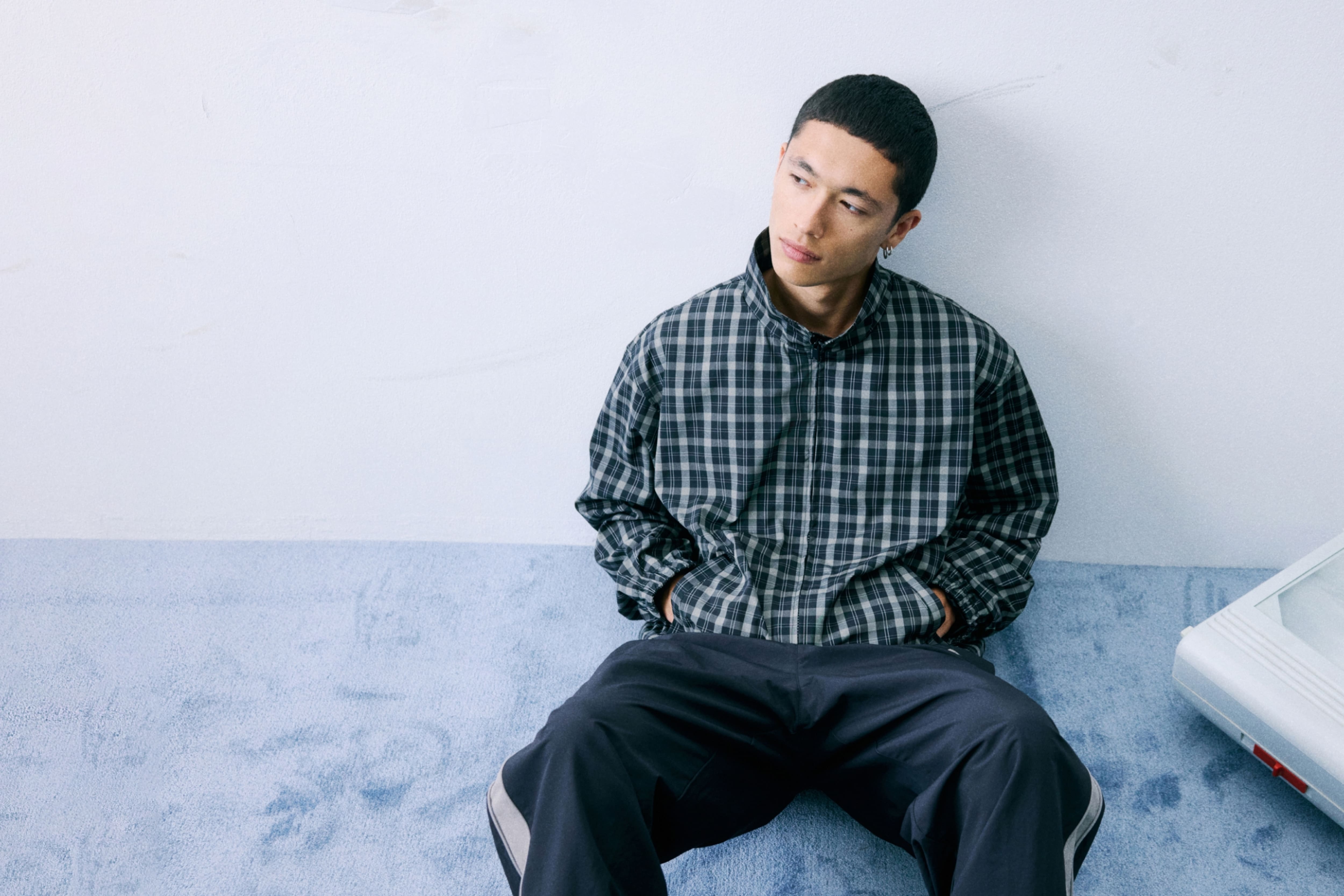
Nineties and early-2000s sportswear is back, but in a specific register — not the loud logo era, the quieter club-shop version. Stand-collar track jackets, nylon panels, elastic hems with cord stoppers, jersey zip-ups with applied lettering. Deep teal and navy are the colors doing the heavy lifting, with a graphic check running through jackets and pants as the season's one real pattern.
The reason this works for fall rather than reading as gymwear is fabric weight. A nylon-faced track jacket is genuinely windproof, and a straight-leg sweatpant in a heavy loopback is warmer than most chinos.
The reason this works for fall rather than reading as gymwear is fabric weight. A nylon-faced track jacket is genuinely windproof, and a straight-leg sweatpant in a heavy loopback is warmer than most chinos.
What to buy
• A stand-collar track jacket in navy, teal or a graphic check — the defining piece. Color-blocked versions look more expensive than they are.
• Straight-leg sweatpants with an elastic cuff, in gray melange or navy. Straight, not tapered.
• A zip-through hoodie in a heavier loopback, either plain or with a small printed graphic.
• A sports or graphic tee — collegiate lettering, a small chest print, nothing loud.
• A hooded windbreaker or half-zip for the weeks when it's raining but not yet cold.
How to wear it
Match the top and bottom in the same color family and the whole thing reads intentional rather than thrown on. A navy track jacket over a white tee with navy straight-leg sweats and clean sneakers is the complete look, and it takes ten seconds to assemble.
The upgrade move: swap the sweatpants for wide-leg jeans or cargo pants. The tech jacket over denim is a far more grown-up outfit than the full tracksuit, and it's the version that works at the office-adjacent end of casual.
The upgrade move: swap the sweatpants for wide-leg jeans or cargo pants. The tech jacket over denim is a far more grown-up outfit than the full tracksuit, and it's the version that works at the office-adjacent end of casual.
Washed leather, loose denim & raw edges
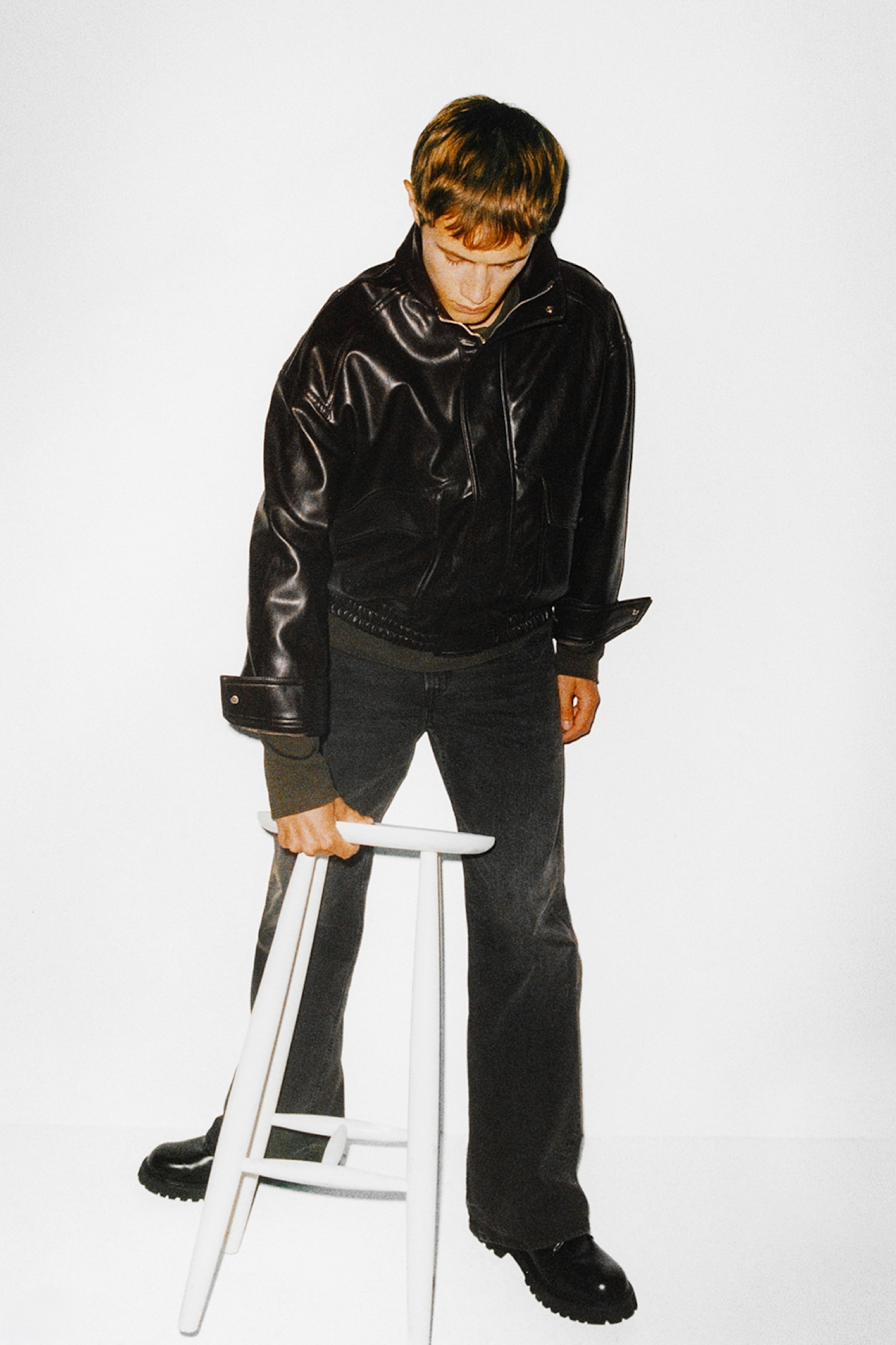
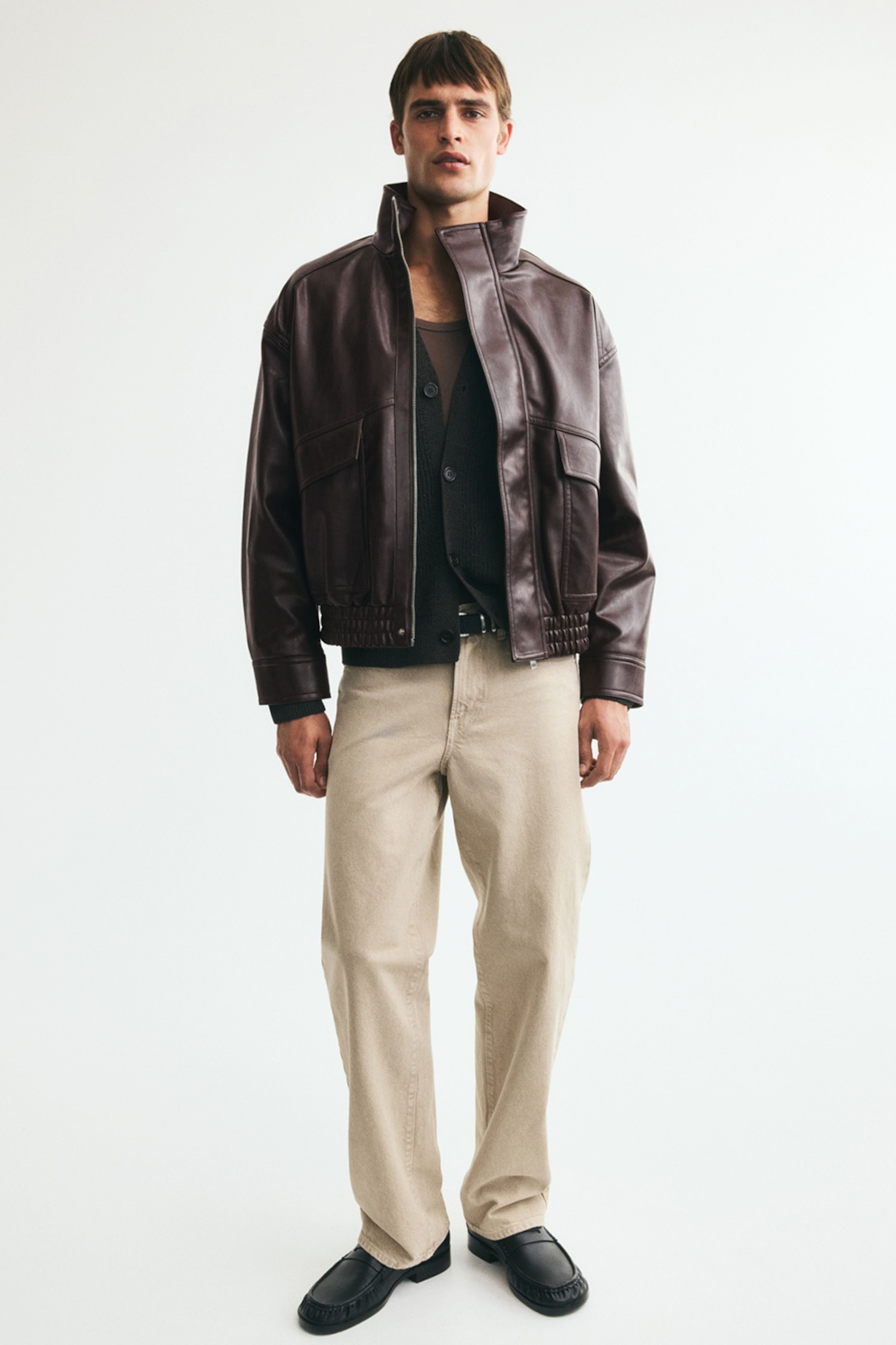
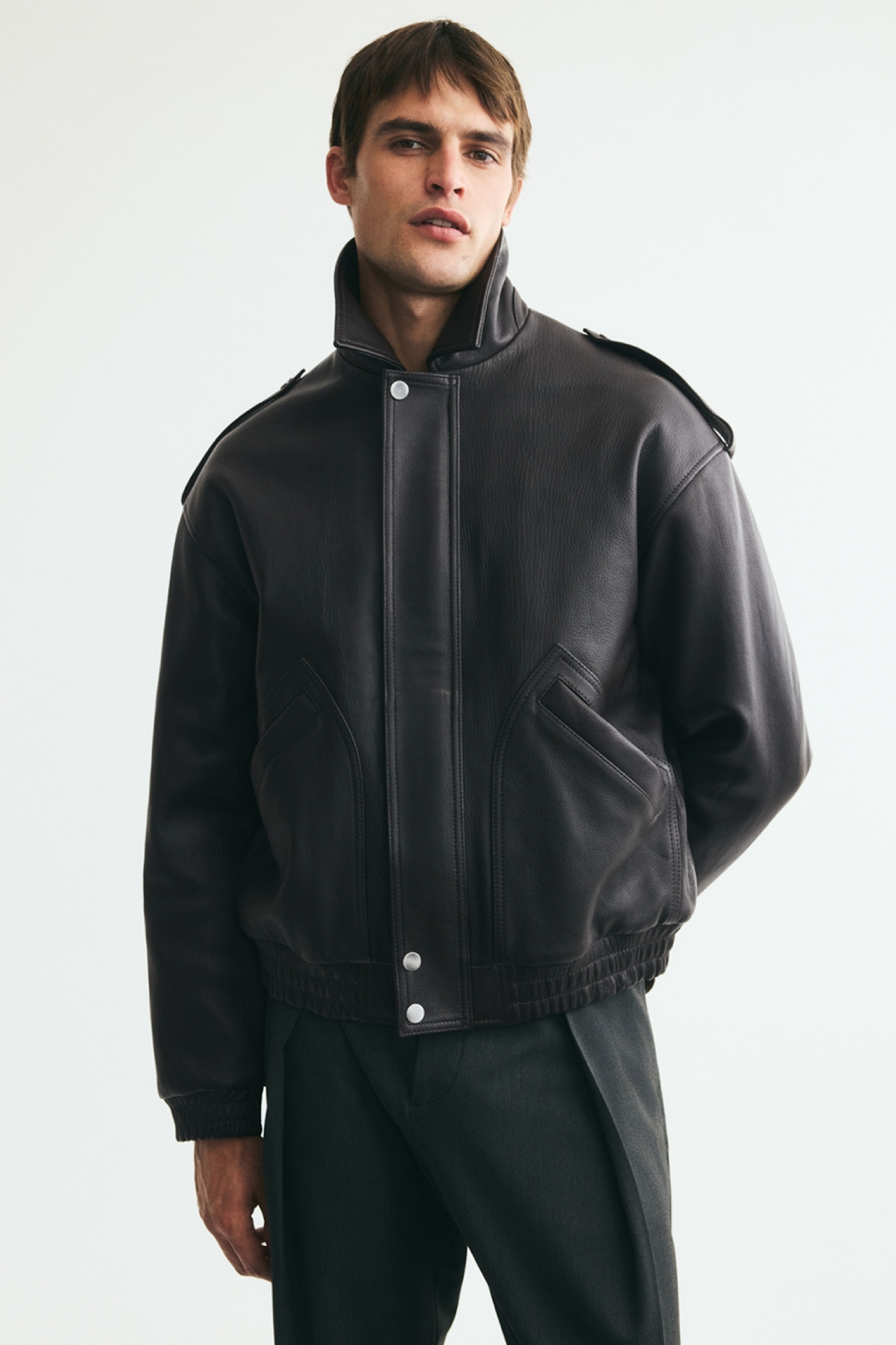
The street end of the season is built on things that look like they've already been worn for a decade. Washed and faded jersey, exposed seams, unfinished hems, and above all a statement leather jacket — a boxy jacket in deep brown, worn oversized, zipped or open over a hoodie.
Denim is the other half of it, and it's very loose: baggy, mid-blue, occasionally ripped, always long enough to stack on the shoe. Paired with the brown leather above, it's the single most recognizable silhouette of fall 2026.
Denim is the other half of it, and it's very loose: baggy, mid-blue, occasionally ripped, always long enough to stack on the shoe. Paired with the brown leather above, it's the single most recognizable silhouette of fall 2026.
What to buy
• A brown leather-look jacket — boxy, cropped at the hip, worn a size up. If you buy one jacket this season, buy this.
• Loose or wide-fit jeans in a mid or light wash. Straight from the hip, no taper.
• A hooded overshirt or checked hooded shirt — an overshirt with a jersey hood attached, which sounds like a compromise and works better than either piece alone.
• A washed crewneck sweatshirt in chocolate or charcoal, with a faded, non-uniform finish.
• Loose slacks in a small check — the piece that keeps this from being an all-denim wardrobe.
• A workwear jacket in olive or brown for the days the leather is too much.
How to wear it
Everything is loose, so the fix is length rather than width: keep the top layer short. A cropped leather jacket over baggy jeans works because the jacket ends at the hip. The same jeans under a long coat swamps you.
Footwear: brown leather shoes rather than sneakers. A round-toe derby or a soft loafer under wide denim is what pulls the look out of streetwear and into something more considered.
Footwear: brown leather shoes rather than sneakers. A round-toe derby or a soft loafer under wide denim is what pulls the look out of streetwear and into something more considered.
Atelier: elevated tailoring, for the end of the season
Arriving later in fall is the sharper, quieter counterpoint to everything above: proper three-button blazers, long wool coats, leather pants, merino turtlenecks, and knitwear substantial enough to wear as outerwear. This is the part of the season where cut and fabric matter more than any trend.
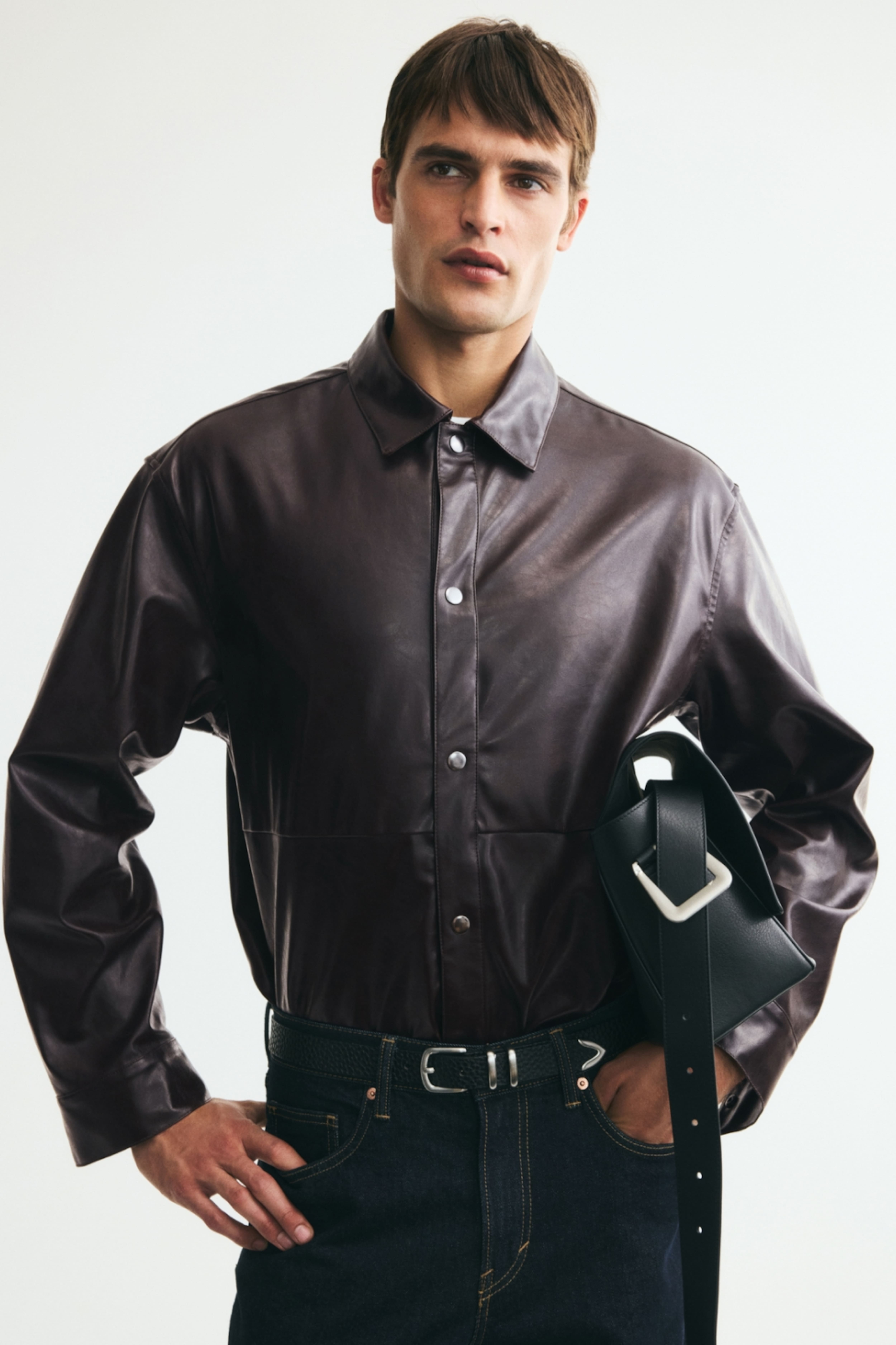
The palette narrows further — black, charcoal, ecru, oxblood — and the styling is deliberately plain. A turtleneck under a blazer, a leather coat over a striped shirt, a knit tank over a long-sleeve tee.
The palette narrows further — black, charcoal, ecru, oxblood — and the styling is deliberately plain. A turtleneck under a blazer, a leather coat over a striped shirt, a knit tank over a long-sleeve tee.
What to buy
• A long coat in wool or leather. The one purchase that changes how everything underneath reads.
• A three-button blazer cut with some structure, in black, charcoal or a muted check.
• A merino turtleneck — the most useful layer in a cold-weather wardrobe, worn alone or under everything.
• A knit tank or sleeveless knit over a long-sleeve tee, which is the season's easiest layering trick.
• Straight or pleated tailored pants and one pair of dark, rigid five-pocket jeans.
• Derby shoes or leather loafers plus a slim leather belt. Accessories are where this tier earns its keep.
How to wear it
Keep the palette to two colors and let texture create the interest — a wool coat over a merino knit over a cotton shirt is three different surfaces in one shade family. Add a 2.76” tie if you want the look to tip properly formal; leave it off and it stays smart-casual.
How to layer for fall: the three-layer rule
Fall layering fails for one reason — bulk. The fix is a fixed structure, with each layer doing a different job:
• Base — thin and close to the body. A tee, long-sleeve tee, henley or fine knit. This is the layer that should never add volume.
• Mid — the one that provides warmth. A knit, half-zip, sweatshirt, overshirt or knit tank. Textured is better than plain here, because it's the layer that shows at the neck and cuff.
• Outer — the one that handles weather. A leather jacket, blazer, workwear jacket, windbreaker or coat.
• Mid — the one that provides warmth. A knit, half-zip, sweatshirt, overshirt or knit tank. Textured is better than plain here, because it's the layer that shows at the neck and cuff.
• Outer — the one that handles weather. A leather jacket, blazer, workwear jacket, windbreaker or coat.
Two things make this work. Each layer should be wearable on its own, so you can shed one at any point in the day and still look dressed. And each should be slightly longer or heavier than the one beneath it, so there's a visible step from base to outer instead of a single indistinguishable mass.
The proportion rule
One loose piece, one fitted piece. Wide-leg pants need a close top. A boxy overshirt or oversized hoodie needs a narrower leg. This is the whole of it — and with wide jeans, loose slacks and boxy overshirts all in fashion simultaneously, it's the difference between looking current and looking like the clothes are wearing you.
The one exception is the matching set, where both halves are loose but share a color and fabric, so the eye reads a single silhouette rather than two competing ones. That's exactly why coordinates work.
The one exception is the matching set, where both halves are loose but share a color and fabric, so the eye reads a single silhouette rather than two competing ones. That's exactly why coordinates work.
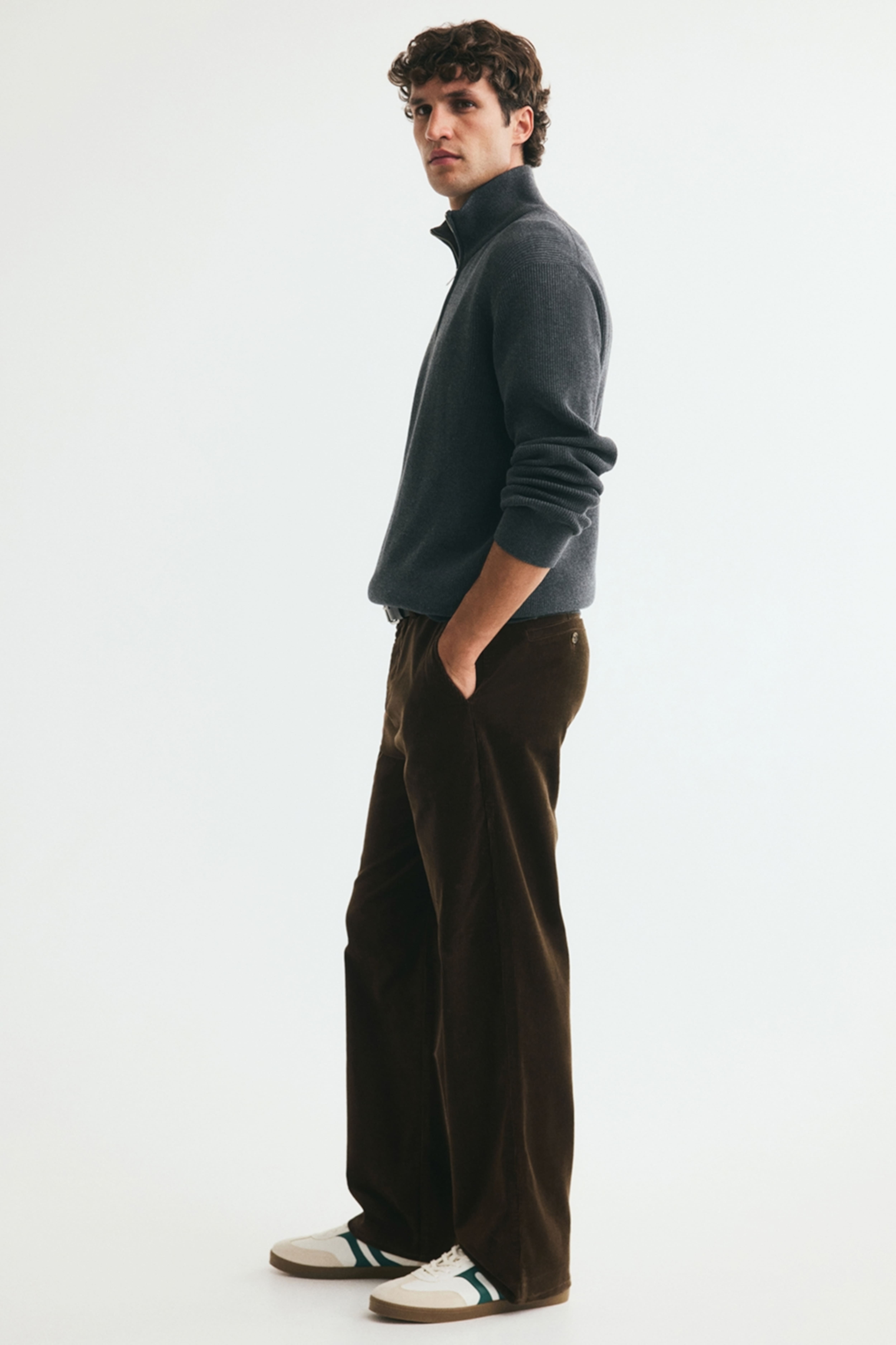
14 pieces that cover the whole season
If you're starting from nothing, this is the list. Everything here goes with everything else, which means fourteen pieces produce well over thirty outfits.
• An unstructured blazer in sand, taupe or gray
• Matching loose or pleated pants in the same fabric
• A brown leather-look jacket
• A boxy overshirt in check or oxblood
• A stand-collar track jacket in navy or teal
• A zip-through hood in a heavy loopback
• A washed crewneck sweatshirt in chocolate or charcoal
• A merino or lambswool turtleneck
• A half-zip knit in gray or navy
• Two long-sleeve henleys — one ecru, one chocolate
• Loose or wide-leg jeans in a mid wash
• Corduroy pants in brown or olive
• Straight-leg sweatpants in gray melange
• Leather loafers or a round-toe derby shoe
What to wear, by occasion
Transitional dressing is really a layering problem: one warm week, one cold evening, and rain in between. These eight formulas cover the run from early September to late October, and they all draw on the same palette.
September
• Warm September day — ecru henley, unstructured sand blazer, matching loose pants, leather loafers.
• Cool September evening — white tee, oxblood boxy overshirt worn open, off-white denim, derby shoes.
• Cool September evening — white tee, oxblood boxy overshirt worn open, off-white denim, derby shoes.
Weekend
• Casual — brown leather jacket, gray washed crewneck, loose mid-wash jeans, brown loafers.
• Sporty — navy track jacket, white sports tee, gray straight-leg sweatpants, clean sneakers.
• Sporty — navy track jacket, white sports tee, gray straight-leg sweatpants, clean sneakers.
Work and smart-casual
• Office-adjacent — merino turtleneck, three-button blazer, straight tailored pants, derby shoes.
• Evening out — black knit, brown leather jacket, charcoal loose slacks, loafers.
• Evening out — black knit, brown leather jacket, charcoal loose slacks, loafers.
Weather-dependent
• Rainy transitional day — long-sleeve tee, half-zip knit, hooded windbreaker, corduroy pants, boots.
• Cold October — long-sleeve tee, knit tank, wool coat, dark rigid jeans, leather shoes.
• Cold October — long-sleeve tee, knit tank, wool coat, dark rigid jeans, leather shoes.
The through-line: two light layers beat one heavy one. A long-sleeve tee under a knit under outerwear adapts to a 15-degree swing in a way a single coat never will.
What to buy in September, and what to wait for
Fall isn't one season, it's two, and buying everything in the first week of September is how people end up with a wardrobe that's wrong for half of it.
Buy in late August and September
Transitional layers — the overshirt, the unstructured blazer, the track jacket, the half-zip, the henleys. These are things you wear over a T-shirt when it's fifteen degrees and unpredictable, which describes most of September. This is also when the widest color choice is available.
Wait until late September or October
Outerwear and heavy knitwear — the wool coat, the leather jacket, the turtleneck, the padded vest. There's no advantage to owning a coat in August, the later drops carry the better fabrics, and you'll have a clearer sense by then of which colors you're actually reaching for.
Frequently asked questions
What are the main men's fall trends for 2026?
Unstructured tailoring worn as matching coordinates; retro sportswear in nylon and jersey; washed leather with loose-fit denim; and substantial knitwear in a narrow, muted palette. Silhouettes are looser than recent seasons, and color has narrowed to browns, taupes, off-whites, charcoal and navy.
What colors are men wearing this fall?
Chocolate and deep brown are the dominant neutrals, supported by taupe, sand, ecru and off-white, with charcoal and gray melange underneath. Navy and deep teal carry the sportswear pieces, and oxblood works as the season's single accent. Bright color is largely absent.
Are skinny jeans still out of fashion?
Yes. The fall 2026 denim offering is loose, wide and straight, cut full through the thigh and long enough to stack slightly on the shoe. If you want a narrower leg, straight tailored pants or slim corduroys read far more current than skinny jeans.
How many layers should you wear in fall?
A thin base layer, an insulating mid layer, and an outer layer that handles the weather. Each should work on its own so you can remove one and still look dressed, and each should be slightly longer or heavier than the one beneath it.
What's the one thing worth buying this season?
A brown leather-look jacket, or an unstructured blazer with matching pants. The first sets the tone for the casual half of the season and the second for the smart half, and each turns a wardrobe you already own into something that reads as 2026.
Can you still wear sneakers in fall?
With sportswear, yes — clean sneakers are part of the look. With wide denim or tailoring, leather shoes do considerably more work. A loafer or round-toe derby under loose pants is what separates a considered outfit from a casual one.
What's the difference between an overshirt and a jacket?
An overshirt is cut like a shirt — buttoned, shirt collar, no lining — but in a heavier fabric such as brushed cotton, corduroy or wool blend. It sits between a shirt and a jacket, which is why it's the most useful thing to own in September and again in April.